
Gastrointestinal Surgery Department Specialty
1. Department Overview
The Department of Gastrointestinal Surgery - Hue International General Hospital is a specialized unit in the examination, diagnosis, and surgical treatment of gastrointestinal, hepatobiliary, and pancreatic diseases.
The team of doctors has high expertise and experience in the field of gastrointestinal surgery (Associate Professors, PhDs, Specialists II, Masters, Specialists I, etc.) along with experienced, dedicated, and attentive nurses in monitoring and caring for patients.
A variety of techniques are implemented, from traditional open surgery to minimally invasive laparoscopic surgery, and radiofrequency ablation (RFA) for the treatment of liver tumors, thyroid tumors, breast tumors, etc., bringing optimal treatment effectiveness, shortening treatment time, and promoting faster recovery for patients.
The department performs surgeries such as appendectomy, cholecystectomy, gastrectomy, and colectomy/rectectomy. The department handles various liver, gallbladder, and pancreatic surgeries such as benign liver tumors, malignant liver tumors, bile duct tumors, bile duct stones, pancreatic duct stones, and pancreatic tumors. It also treats anorectal diseases such as rectal prolapse, hemorrhoids, and anal fistulas. Abdominal diseases include inguinal hernias and abdominal wall hernias, as well as thyroid surgery.
The application of laparoscopic surgery helps reduce pain, complications, and improve post-operative aesthetics.
The Department of Gastrointestinal Surgery collaborates closely with other specialties such as Anesthesia and Resuscitation, Diagnostic Imaging, and Emergency Resuscitation to ensure accurate diagnosis and effective treatment for even complex or emergency surgical cases. Patients receive detailed explanations of their condition and advice on appropriate treatment methods based on their health and disease stage. They are closely monitored before, during, and after surgery, with comprehensive, safe care and optimal recovery support.
2. Services and Specialties
The types of pathologies treated are performed using laparoscopic or open surgery depending on the patient's condition and stage of the disease, with the goal of ensuring the safest and best treatment results (early and long-term results).
* Digestive Surgery
Appendicitis
Gastroduodenal, small intestine, and colorectal diseases.
Tumors and inflammatory foci in the abdominal cavity and retroperitoneum.
* Liver, Gallbladder, and Pancreatic Surgery
Liver resection due to cancer and benign liver tumors.
Gallbladder diseases due to stones, polyps, bile duct tumors, intrahepatic and extrahepatic bile duct stones, endoscopic lithotripsy via biliary tract endoscopy…
Pancreatic tumor surgery, pancreatic stones, and related pathologies.
* Anorectal Surgery
Hemorrhoidectomy using a machine (Longo method) or traditional method.
Treatment of anal fissures, fistulas, and anorectal polyps.
Rectal prolapse suspension via laparoscopic surgery
* Abdominal wall hernia surgery
Inguinal hernia, femoral hernia, umbilical hernia.
Symptoms of the midline abdominal hernia, post-operative hernia.
* Thyroid surgery
Laparoscopic or open surgery for the treatment of benign goiter, thyroid nodules, Graves' disease.
* Surgical emergency examination & management
Acute abdominal pain.
Blank abdominal trauma (rupture of solid organs, rupture of hollow organs, contusion of the intestinal mesentery, etc.)
Gastrointestinal bleeding.
3. Advanced methods and equipment
- Minimally invasive laparoscopic surgery
Helps reduce pain, minimize blood loss, improve aesthetics, shorten treatment time, and promote faster recovery.
- Modern operating room system meeting international standards
Equipped with new generation endoscopic equipment and specialized gastrointestinal surgery support equipment such as ultrasonic scalpels, vascular sealing devices, etc.
- Strict aseptic procedures
Ensures maximum safety and reduces the risk of postoperative infection.
- Postoperative monitoring using EMR – HIS – PACS system
Interdepartmental connectivity, supporting continuous monitoring before, during, and after surgery.
- Multidisciplinary collaboration
Anesthesiology and resuscitation - Diagnostic imaging - Emergency resuscitation to optimize treatment outcomes.
Facility
Medical Facilities
International Standard Sterile Operating Room: Designed according to surgical safety standards, with strict aseptic control
Ensuring an optimal environment for complex gastrointestinal, hepatobiliary, and pancreatic surgeries.
Advanced 4K Surgical Endoscopy System (Image S Rubina) with high-resolution imaging technology
Support detailed tissue and blood vessel observation, enhancing the accuracy of minimally invasive endoscopic surgery and shortening recovery time.
Integrated Diagnostic Imaging Equipment Throughout the Hospital: MRI, CT-Scan, ultrasound, and X-ray are directly connected to the PACS system
Allowing doctors to access images quickly and improving accuracy in diagnosis before, during, and after surgery.
Continuous Vital Signs Monitoring System
Monitors heart rate, blood pressure, and blood oxygen levels in the operating room and recovery area, ensuring absolute safety throughout the surgical process.
Managing surgical records and images using HIS - PACS - EMR, all treatment data is digitized and interconnected between departments
Enabling seamless treatment monitoring, reducing errors, and optimizing the effectiveness of surgical care.
Patient Room Facilities
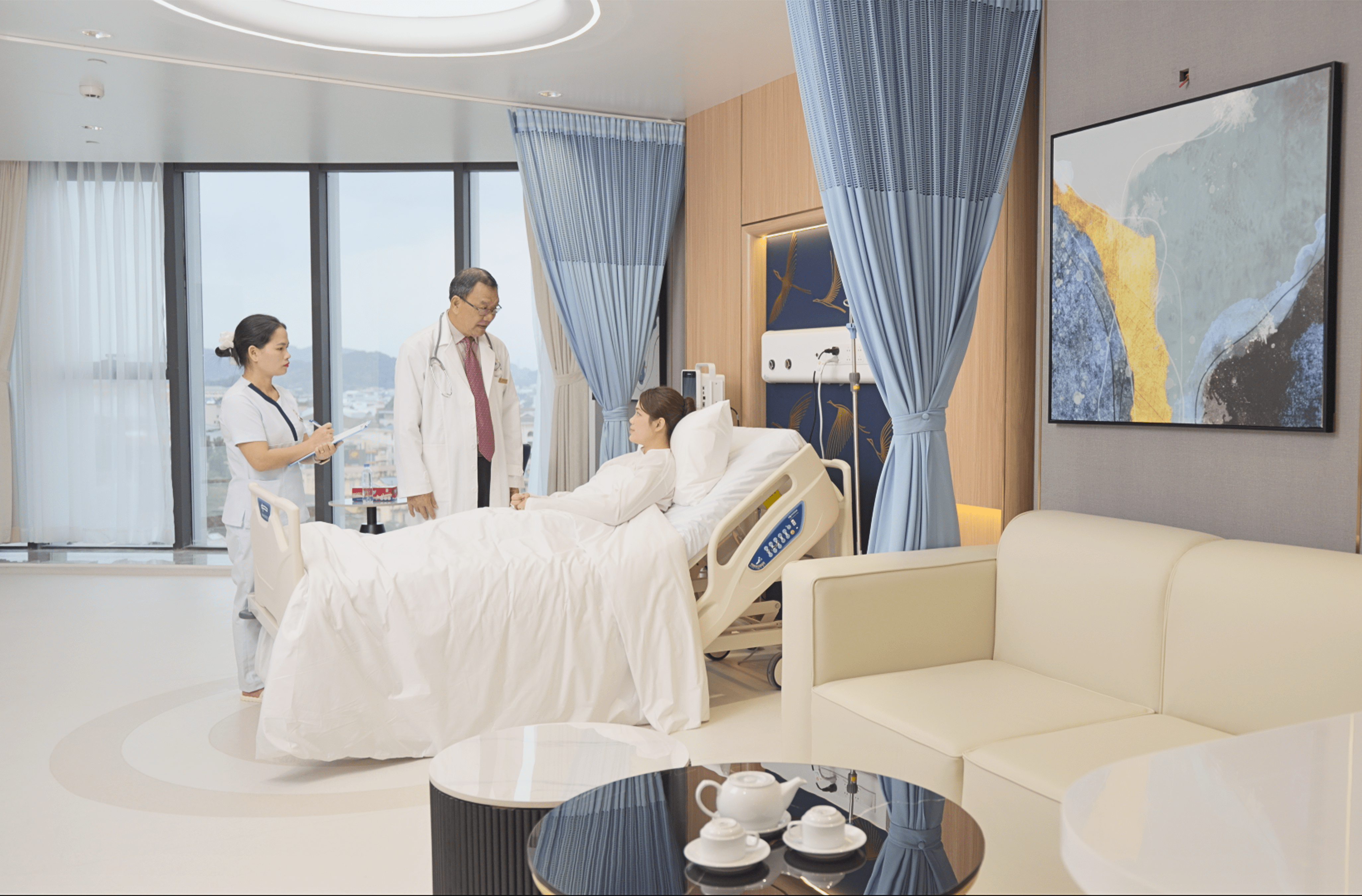
Hospital-Hotel Standard Patient Room
Modern, private, and friendly design helps patients rest comfortably and recover better.
Fully equipped for patients and their families
Equipped with multi-functional electric beds, TV, minibar, personal lockers, and air conditioning for convenience in daily life.
Private, clean, and enclosed bathroom
Ensures hygiene, safety, and minimizes the risk of post-surgical infection.
24/7 bedside nurse call system
Quick connection with nurses for timely support of all care needs.
Spacious, quiet, and supportive recovery environment
Rooms are arranged logically, creating a high-quality recovery environment for patients after gastrointestinal surgery.
Nutritious meals & customized care services
Menus are tailored to the surgical treatment regimen; The support staff are dedicated and attentive.
Image
Gastrointestinal Surgery Department Specialty
Medical Team
You may also be interested in
View all